Building on a School Calendar: What It Takes to Hand Over Before August
A school project has one deadline that does not move, and it is set by the calendar, not the contractor.
September 3, 2026 · 4 min read
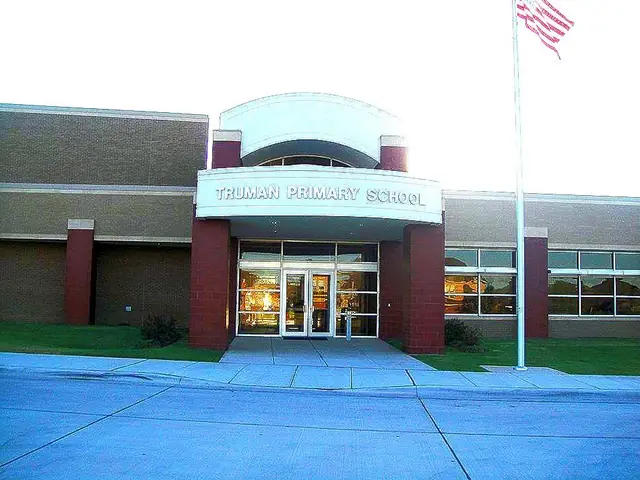
A school district does not get to slide its opening day because a construction project ran long. Every other kind of commercial owner has some room to negotiate a late handover. A superintendent does not, because there are buses to route, teachers under contract, and families who planned a summer around a known start date. That single fact changes how a school project has to be sequenced from the very first pre-construction meeting.
The schedule is set backward from opening day
Most commercial schedules get built forward: start date, plus estimated duration, equals finish. A school project has to be built backward from a finish date that is fixed by state law and district calendars, with every phase, inspection, and procurement milestone worked out from that endpoint toward the present. If the math does not close, the scope or the start date has to change, not the opening date.
Phasing around occupied buildings
New construction on an empty site is the easy version of a school project. An addition or a renovation to a building that is still holding classes is the harder and far more common version. That work has to be phased so that active classrooms, cafeterias, and gyms stay usable and safe while adjacent areas are under construction, with clear separation between the job site and anywhere a student or staff member walks. Sequencing that correctly, trade by trade, is most of what a construction manager on a school job is actually managing.
Why summer is not a season, it is a deadline
Summer is the only window most districts have to do the disruptive parts of a project without displacing students. That means the heaviest work has to be planned to fit inside roughly ten weeks, which puts real pressure on procurement. Long-lead items, whether that is structural steel, specialized mechanical equipment, or custom millwork, have to be identified and ordered during design, not after the summer clock has already started. A preliminary construction schedule that flags long-lead items early is not paperwork. It is the difference between a July delivery and an August one.
The role progress meetings play once construction starts
A tight summer window does not survive a schedule nobody is watching. Regular progress meetings and project schedule updates are what let a district catch a slipping trade before it becomes a slipping opening day, rather than after. On a school job those meetings carry more weight than they would on a typical commercial build, because there is no fallback date to slide to if a milestone is missed. Complete project oversight, from groundbreaking to the final punch list, only means something if it is checked on a schedule the owner can see, not reported after the fact.
What an architect sees on the other side of the same project
A general contractor is not the only party accountable for a school's opening date. Kaighn Associates Architects, Inc. worked alongside GAC on Truman Primary School in Norman and put their own read on the working relationship in writing: "GAC played a key role in assuring that everything went smoothly and helped maintain a positive working environment for all parties involved. This was a successful project and we look forward to working with your company again in the future." An architect's comment about the working environment is not a small thing on a phased, occupied-campus job. Friction between design and construction teams is exactly what turns a tight summer schedule into a missed one.
Schools carry their own project history
Geddes-Armstrong Construction's published project list includes several Norman and Oklahoma City area schools beyond the two named above, among them Noble High School, Hubbard Elementary, Norman North High School, and Centennial Elementary. A district evaluating a contractor for a summer project has a reasonable ask: point to comparable school work, not just comparable square footage. A commercial office build and a school addition share very little in terms of the calendar pressure involved, even if the construction line items look similar on paper.
What Dibble Public Schools got right by demanding it
Dibble Public Schools put the outcome in writing after a new building and addition project: "GAC was able to complete the projects on time and allow us to begin the school year as scheduled. GAC has answered all of our questions and worked with us on budgetary items. They have been able to provide practical solutions to any problems that resulted from the project." Read that closely and the order matters. On time comes first, because for a school owner it is the only line item that cannot be renegotiated after the fact.
- Confirm long-lead items are identified and ordered during design, before summer construction begins
- Ask for a written phasing plan that names which areas stay occupied and when
- Get the finish date in the contract, not just an estimated duration
A district weighing a summer construction window should ask any contractor how they intend to protect the opening date, not just how they intend to build the project. Those are different questions, and the second one is the one that actually determines whether the buses run on time.
Geddes-Armstrong Construction — (405) 329-1460
Call (405) 329-1460More articles
GMAX, Cost-Plus or Competitive Bid: Choosing a Contract Before You Choose a Builder
The contract you sign shapes the project more than the contractor you sign it with.
What Pre-Construction Actually Buys You
The work done before ground is broken determines more of a project's outcome than the work done after.