The Lease-Back: How a Growing Business Gets a Custom Building Without Buying One
A custom building and owning real estate are two different problems, and they do not have to be solved at the same time.
September 3, 2026 · 4 min read
A growing business usually has two competing needs at the same time: a facility built for exactly what it does, and cash to keep doing it. Buying land and constructing a building can answer the first need while directly working against the second, because every dollar spent on real estate is a dollar not spent on staffing, inventory, or the next phase of growth. The lease-back model exists to separate those two problems.
What a lease-back actually is
For qualified tenants and businesses, Geddes-Armstrong Construction offers a lease-back model where they design and construct a custom commercial space tailored to the tenant's operation, then lease it back to that tenant under flexible, negotiable terms. In plain terms: the business gets a building designed around how it actually operates, without having to be the one to finance and own the ground it sits on. GAC builds it, GAC owns it, and the business that needed it occupies it under a lease.
What the arrangement is meant to deliver
A new, fully customized facility. Predictable long-term occupancy costs instead of a construction budget with open-ended risk. Capital preserved for growth, staffing, or inventory, rather than tied up in a building. And a true partner in both construction and real estate, which matters because a tenant negotiating a lease-back is not negotiating with a landlord who happened to buy an empty building. They are negotiating with the company that designed and built the space specifically for them.
Lease-back versus buying
Buying land and building outright gives a business full ownership and full control over the asset, and over time it can build equity the business keeps. It also means carrying construction financing, absorbing the risk of cost overruns directly, and locking up capital in real estate at exactly the point in a business's growth when that capital might be more valuable somewhere else. A lease-back trades the long-term ownership upside for near-term capital flexibility. Neither is universally better. It depends on whether a business needs the building or needs the cash more, right now.
Lease-back versus leasing existing space
Leasing an existing building is usually faster and can be cheaper up front, but it means fitting an operation into a space that was designed for whatever the previous tenant needed, not for the actual business moving in. A lease-back keeps the speed advantage of leasing, in the sense that the business does not have to finance construction itself, while still getting a building designed and constructed around its real requirements from the start. The trade-off is that a custom-built lease-back takes longer to deliver than simply signing a lease on space that already exists.
The kind of buildings this fits
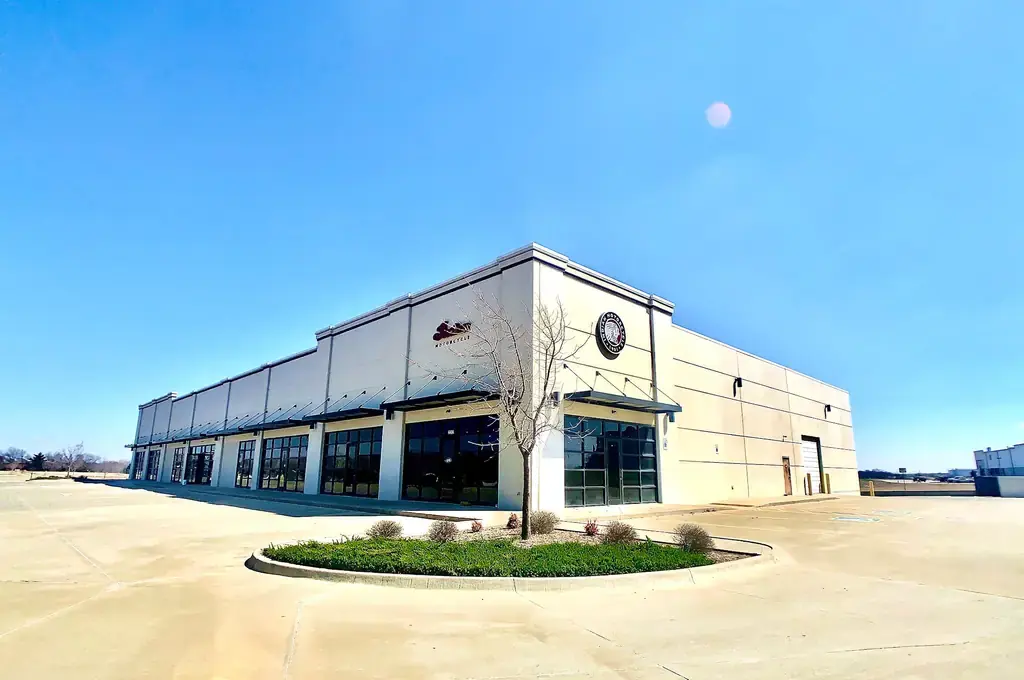
Geddes-Armstrong Construction builds across a wide range of commercial building types, including office buildings, financial buildings such as banks and credit unions, restaurants from full-service to quick-service and franchise prototypes, retail buildings including in-line stores and shell buildings, and healthcare buildings such as clinics and urgent care facilities. A retail or restaurant operator expanding into a new market is a natural fit for the lease-back conversation, because that kind of business usually needs a building shaped around a specific format, drive-through configuration, or storefront layout well before it has the capital or the appetite to also become a real estate developer. Their published project gallery includes retail work such as an Indian Motorcycle showroom, one example of the kind of purpose-built retail space this model is meant to produce.
What qualifies a tenant
The lease-back model is offered to qualified tenants and businesses, which means it is a fit assessment on both sides rather than a standing offer available to anyone with a floor plan. Terms are negotiable, which cuts both ways: a tenant with a clear operating history and a specific facility need has real room to shape the lease structure, but the specifics of rate, length, and renewal options are worked out project by project rather than published as a fixed menu. Any business considering this route should treat the first conversation as a scoping discussion, not a signed deal.
Adjacent options worth knowing about
For a business not ready to commit to new construction at all, Geddes-Armstrong Construction also has move-in ready commercial building space available for existing leases, and can help find a different space or make changes to fit a tenant's needs if nothing on hand is an exact match. There are also commercial building lots currently ready and available for a business that wants to build to suit but is further along in that process. A conversation with a builder that offers all of these options, rather than only one, tends to surface the right fit faster than starting from a single fixed idea of what the building has to be.
- Own and build: full control and long-term equity, but capital and cost-overrun risk sit with the business
- Lease existing space: fast and available now, but the space was built for someone else's operation
- Lease-back: a custom-built facility with capital kept free for the business, on negotiable lease terms
The model works best for a business that knows what it needs in a building and would rather put its money into growing the business than into owning the building it grows in. Terms are negotiated case by case, and the right structure depends on the specific tenant and project, which is a conversation worth having early rather than after a site has already been chosen.
Geddes-Armstrong Construction — (405) 329-1460
Call (405) 329-1460More articles
GMAX, Cost-Plus or Competitive Bid: Choosing a Contract Before You Choose a Builder
The contract you sign shapes the project more than the contractor you sign it with.
Building on a School Calendar: What It Takes to Hand Over Before August
A school project has one deadline that does not move, and it is set by the calendar, not the contractor.